



Category Archives: BLog

Why Current Survey Data Is Non-Negotiable for Project Success

Scott Gregory, PLS
Department Manager – Scanning and Surveying

“Accurate, current survey data is the foundation of every successful project. When existing conditions are verified early and survey control is established, teams avoid rework, control risk, and keep schedules and budgets intact. Investing in a quality survey up front is one of the most effective ways to protect a project’s outcome.”

vec total sta

Construction Assistance – Equipment Layout
Read more about this project

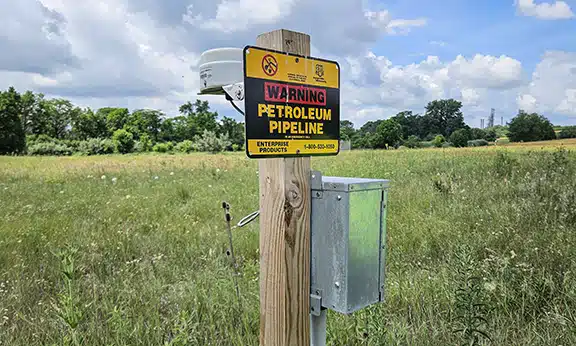
Pipeline Corridor Survey

Read more about this project

500KV Transmission Corridor Survey

Read more about this project

In disciplined project delivery, accurate and current survey data is a prerequisite, not a luxury. Survey information establishes the factual baseline for design, permitting, and construction. When that baseline is outdated—even by a few years—risk is introduced immediately. Assumptions replace verified conditions, and those assumptions often surface later as cost overruns, schedule impacts, and execution challenges.

Outdated Surveys Create Downstream Exposure
Site conditions change continuously. Utilities are added or abandoned, grade elevations may be altered, new infrastructure is constructed, and reference monuments move or are disturbed. Designing against old survey data undermines decision-making and increases the likelihood of construction issues and rework. Projects that rely on stale information often encounter conflicts midstream, when corrective action is most disruptive and expensive.

Early Survey Cost-Cutting Is a False Economy
Reducing or deferring survey scope at project initiation may appear fiscally responsible, but it shifts risk into later phases where the cost of correction multiplies. Field revisions, redesign, construction delays, and change orders are common consequences. A comprehensive survey at the outset stabilizes scope, supports constructability, and protects the project schedule.

Coordinate System Verification Is Foundational
Inconsistent horizontal or vertical control is a frequent root cause of design and construction issues. Verifying and documenting coordinate systems and benchmarks at the beginning of the project ensures all stakeholders are working from a single, consistent spatial framework. This alignment prevents interface conflicts and eliminates avoidable adjustments later in execution.

How Valdes Adds Value
Valdes Architecture & Engineering provides integrated survey solutions that directly address these risks. Our team delivers current, high-quality existing conditions using proven methodologies and advanced technologies, including traditional surveying, 3D laser scanning, and drone-based data capture. These tools allow us to generate accurate, high-resolution datasets efficiently while maintaining rigorous quality control.

Valdes also places strong emphasis on front-end verification. We validate coordinate systems, confirm control networks, and reconcile survey data with design and construction requirements early, reducing uncertainty before it affects schedule or cost. Our survey services are fully integrated with engineering and design disciplines, ensuring seamless data handoff and consistent use across the project lifecycle. Learn more about these capabilities here.

Proven Results in Practice
Our project experience demonstrates that comprehensive, current survey data improves predictability and execution. In topographic survey applications, accurate terrain and feature mapping has enabled better grading plans, clearer utility coordination, and fewer field conflicts.

Bottom Line
Current survey data is a strategic investment that protects project performance. Verifying existing conditions, positioning of survey data, and documented control at project initiation reduces risk, avoids delays, and supports cost certainty. Valdes helps clients get this right the first time by delivering reliable survey solutions that align with long-standing best practices and modern execution demands.

Contact [email protected] to discuss your project needs.

Share this post

Valdes: Your Trusted Partner for Transportation Projects

John E Naughton III, PE
Director of Transportation

Illinois Department of Transportation Phase II Highway Design

Read more about this project

Phase III Veterans Memorial Tollway Fiber Optic Improvements

Read more about this project

Illinois Tollway Central Warehouse Sign Shop Improvements

Read more about this project

At Valdes, we’re proud to bring our decades of multidisciplinary engineering expertise to the transportation industry—and even prouder to be prequalified with the Illinois Department of Transportation (IDOT). This prequalification underscores our commitment to delivering exceptional service and innovative solutions for transportation projects across Illinois.

Expanding Into Transportation with Proven Excellence

Valdes has built a reputation as a trusted engineering partner across diverse markets, from government and higher education to manufacturing and utilities. Now, with our IDOT prequalifications, we are expanding our reach into the transportation sector—helping communities design, build, and maintain smarter, safer, and more sustainable infrastructure.

Our team offers comprehensive engineering and consulting services tailored to the unique challenges of roadway and transportation projects. Whether we’re supporting a local road improvement, a large-scale highway project, or advanced transportation infrastructure, we provide the expertise and resources to ensure success.

Our Transportation Services

Valdes offers a wide range of services to meet the needs of IDOT and other transportation clients:

  • Transportation / Roadway Engineering – Complete roadway design and engineering solutions.
  • Roadway Surveying – Precision surveys using advanced land survey and drone technology.
  • Civil Engineering Design – Innovative, sustainable designs for roadway and transportation systems.
  • Construction Engineering & Inspection (CE&I) – Quality control and inspection services to ensure projects meet design and regulatory standards.
  • NPDES Permitting & SWPPP Preparation – Expertise in stormwater compliance and environmental permitting.
  • Stormwater Modeling – Advanced modeling for effective water management and drainage design.
  • Structural Engineering – Safe and efficient design of bridges, retaining walls, and other transportation structures.
  • MicroStation / CAD / Civil 3D – Cutting-edge design software for precise and efficient project development.
  • P6 Primavera Scheduling – Robust project scheduling and management capabilities.
  • Electrical Engineering – Design of roadway lighting, signals, and intelligent transportation systems (ITS).

 IDOT Prequalifications

Valdes holds prequalifications in key IDOT categories, including:

  • Special Services – Construction Inspection
  • Special Services – Surveying
  • Highways – Roads and Streets
  • Special Services – Project Controls
  • Special Services – Electrical Engineering

These prequalifications reflect our technical capabilities, our rigorous quality standards, and our readiness to support IDOT projects from concept through completion.

Why Choose Valdes?

As a multidisciplinary team, Valdes combines the agility of a focused team with the resources of a full-service firm. Our engineers, surveyors, and inspectors bring deep knowledge, innovative thinking, and a collaborative spirit to every project. With our IDOT prequalification, we’re ready to partner with municipalities, contractors, and agencies to drive Illinois’ transportation infrastructure forward.

Contact [email protected] to discuss your project or to partner with us on future bulletins.

Share this post

Turnaround Management

Disciplined governance, clear accountability, and early leadership alignment are the real differentiators in effective turnaround management (TAR). From establishing a TAR Steering Team in advance to enforcing scope control, freeze dates, and decision authority, his approach reflects time-tested practices that consistently deliver safer, on-schedule, and on-budget outcomes.

Effective turnaround management (TAR) begins with strong governance and clear accountability, anchored by the formation of a TAR Steering Team and the appointment of a clearly defined TAR Manager. This structure establishes ownership, decision authority, and alignment across operations, maintenance, engineering, and support functions to ensure disciplined execution of the turnaround. The following are best practices regarding turnaround management:

The TAR Manager’s role is:

    • Acts as chair and facilitator of the TAR Steering Team, with the operations manager as the client and the maintenance and engineering managers as key members. Other members include senior site managers responsible for HSE, inspection, capital projects, procurement, and finance.
    • Responsible for the safety, quality, schedule, and overall cost of the TAR. The TAR Manager also has the duty to control manpower levels to ensure that the TAR is properly staffed. All efforts for the TAR associated with operations preparedness, capital and maintenance expense activities should be combined under the control of the TAR Manager.
    • Takes the lead in developing the TAR premise document, which provides the overall purpose, objectives, and constraints for performing the TAR. It should clearly establish the specific business, operational and execution criteria against which all potential scope items are evaluated to determine whether they should be included.

A TAR Steering Team should be established to keep the turnaround on schedule, on budget, and aligned with established operating practices. The TAR Steering Team should be in place at least 24 months prior to each major (high complexity) TAR event, which means it may be a permanent team if you have major TAR events every year or two. The key responsibilities of the TAR Steering Team are as follows:

    • Set and communicate the TAR priorities to the entire site: safety, quality, duration, and cost, in that order.
    • Establish and document a premise that aligns to the business needs and principles of the facility.
    • Understand the TAR process and demand discipline to it by all plant and support functions.
    • Act on threats to achieving the TAR objectives.
    • Control the scope and scope growth.
    • Track preparation progress and correct promptly.
    • Ensure the TAR Manager is supported with strategic planning, financial control and reporting, well managed TAR related capital projects, problem resolution, work scope policy, project milestones and freeze dates, communications, TAR calendar changes, and compliance to all established policies. This is important as I have seen TAR Managers sink due to the lack of support in some or all these areas.
    • Monitor cost and duration forecast relative to budget and act on variances.
    • Monitor environment for potential impacts on turnaround (e.g., business conditions, company-wide production needs, plant performance, corporate requirements, and initiatives, etc.) and act, as necessary.
    • Regular communication of key points to the entire site.

The following reflects methods consistently used in well-executed TAR management efforts:

    • The TAR Manager and the TAR Steering Team should write a work scope development policy prior to the compilation of the initial worklist. This should normally be in place at least 18 months prior to the TAR and act as reference for scope development. The policy should consider all maintenance, capital and inspection work necessary to enable the unit to safely operate to the next planned turnaround. Always look forward to two TARs when planning for the next TAR as you do not want to miss required scope that will need a shutdown between the next two TARs. Only doing essential work is key as any added scope increases the complexity exponentially and lowers your chances of success.
    • Strictly adhere to your milestones including the TAR start dates unless there is an overwhelming business reason to changing it. I have seen senior VPs trying to change the start dates based on short term market conditions and downplay the costs related to loss of momentum, keeping the contractors and expensive hired equipment such as cranes on standby or losing specialist contractors to scheduled work at another facility. Spend time preparing your case and ensure it is clear.
    • A freeze date should be established for all capital and expense work and strictly adhered to. For major (high complexity) TARs I recommend using 14 months. This date is an important control policy that allows for adequate planning and procurement of needed material and equipment. All staff associated with the TAR should fully acknowledge that date. Any work requested after the date must be reviewed and approved through a work request approval process, ideally by the TAR Steering Team. Approving work after the freeze date will also increase the complexity exponentially and lowers your chances of success as it will strain your planning process and may even affect the quality, duration, and cost. I have seen engineers risk assess and easily justify the approval of work requested past the freeze date, which is why this needs to be elevated to the TAR Steering Team so they can assess the true impact to the site. Be strict in this area.

Contact [email protected] to discuss your project.

Share this post

Turnarounds & Safety

A successful turnaround requires more than efficient scheduling and technical execution—it depends on disciplined safety management and consistent communication across every level of the organization. Drawing on years of field experience, these best practices outline proven approaches to strengthening safety performance and control of work (permits) during a planned turnaround.

Upload Image...

The following are some best practices I have seen regarding safety and control of work (permits) during a planned turnaround (TAR):

    • A safety strategy and a statement of requirements should be defined and reviewed with all contractors. For work that is bid, this should be part of the bid specifications and contract.
    • When agreeing on the objectives, and then during the planning, shutdown, execution, start-up, lessons learned sessions and close out, repeat and repeat that the priorities for the TAR are safety, quality, duration and cost, in that order!
    • Safety training should be required to meet company and regulatory requirements for entry permits, lock-out-tag-out, hot work, and control of environmental issues. Documentation of training should be required and where feasible linked to personnel badges.
    • Safety orientations and indoctrinations should be carried out for both company and contractor personnel.
    • Prepare the arena! As you start preparing for the TAR put some work into the physical condition of the area where the people will be walking to and from the TAR, as well as the areas where they will be working, including the shop. To minimize the chances of slips and falls make sure the walkways to and from the TAR, including those from the parking lots, are flat (and properly lit for the night shift). Also ensure all areas are clean, free of obstacles, free of oil or grease. Permeable asphalt would work great in these areas but if you are using gravel, make sure the stones are small to minimize the chances of ankle injury. And all the above will also increase efficiency.
    • On the walkways to and from the TAR and to and from the parking lots as well as the areas where the workers will be doing most of the work and walking, place signs with pictures of some of the worker’s family members; the real families, not generic ones from the internet. Consider putting new ones every week during the event.
    • Have safety meetings with giveaways such as iPads, smart watches, TVs, Yeti Coolers, plane tickets, etc. on Mondays to incentivize attendance and safety.
    • Safety audits with quick, visible corrective actions should begin early and continue throughout the TAR. Communicate to all workers regarding safety audit results, near misses, first aid or injuries.
    • Incident reports should be done as soon as practical following the audit or incident, but preferably within 24 hours.
    • When you get observations, near misses, first aids or injuries, be of the mind of learning to avoid these. Do not scare the workforce as they watch our every move. We as leaders set the tone and environment to bring the most out of everybody.
    • Ensure you have fully equipped medical services at the TAR location. And make sure they are very visible, so they also serve as a reminder of safety.
    • Get your leaders to show constructive presence. They should walk around and interact with the workers, but ensure the interactions are constructive and encouraging.
    • Put your strongest supervision at night, for safety, quality and efficient execution’s sake, again, in that order!
    • Use one permit for each specific job throughout the entire TAR but renewed daily for gas testing.
    • Contractors should do their own risk assessment. Risk assessments should be a one-page checklist. What’s important is the assessment itself. Make sure this is audited for quality.
    • Install battery limit blinds and avoid system isolations. Use equipment blinds for vessel entry and hot work as necessary.

Contact [email protected] to discuss your project.

Share this post

Inspecting & Maintaining Your Plant & Civil Structures

Plant structures often receive less attention than production equipment, yet their integrity is critical to safe and reliable operations. Pressure vessel supports, rotating equipment foundations, walkways, silos, and civil infrastructure all demand consistent inspection and risk-based maintenance. Neglecting these assets can lead to costly failures and unsafe conditions.

Upload Image...

According to the book ‘Asset Integrity Program for Plant Structures’ by Amanda Nurse, plant structures supporting the miles of piping, process vessels, platforms, and ladders routinely used in daily operations often can be given less priority than production equipment. Having a robust inspection and repair program for plant infrastructure is an important component of a site’s integrity management program. The following are tips for implementing an asset integrity program for plant structures.

In the realm of industrial operations, the design and functionality of plant structures play a pivotal role in ensuring safety, efficiency and productivity. The plant structures Amanda Nurse references include the following:

    • Pressure vessel supports
    • Rotating equipment foundations
    • Walking working surfaces, (e.g. platforms, walkways, stairways, ladders, ladder cages, and handrails)
    • Pipe stanchions
    • Buildings
    • Secondary containment
    • Major structures

In addition to the above, I would also include cooling towers, stacks, silos, and civil structures such as sewers, bunds, dams, roads, bridges, canals, and tunnels.

The first step is to implement an asset integrity program for plant and civil structures that includes:

    • Efficient inspection – focus on the 10% to 20% and keep this list updated.
    • Risk-based results. Do not try to do everything as you will miss the real risks.
    • Provide a quantitative mean of demonstrating a reduction in risks.
    • A repeatable process, from unit to unit, plant to plant. This way you can identify and concentrate on the high-risk areas sitewide.
    • A plan based on industry’s best practices.
    • Decision making support for repairs.

The following practical measures should be incorporated to ensure risks are managed effectively during program execution:

    • Mitigate the high risks right away, do not push these through the planning process or sausage machine. This includes barricading the high-risk areas, holding the cracked fireproofing with a mesh, building temporary ladders with scaffold material, etc.
    • This is not just a cold weather issue where the hot summers and cold winters rapidly deteriorate your fireproofing, concrete, roads or bridges. And walkways and ladders will corrode over time. I have seen severe plant structure deterioration at Caribbean facilities as well as in all year round warm and dry climates in the tropics. This is about prioritization.
    • Unsafe situations have occurred due to spalling of concrete. Concrete sections have dropped and caused “falling objects”. This is a safety critical item and should be prevented as far as possible. The preferred method for prevention of spalling concrete is resin coating of all new concrete and all concrete that has been repaired. This coating prevents water ingress through the pores of the concrete.
    • An assessment based on API RP 2218 Fireproofing Practices in Petroleum and Petrochemical Processing Plants can identify areas of deteriorated fireproofing that can be removed (not replaced), resulting in cost savings and reduced maintenance needs.
    • Keep your sewer systems, canals, and tunnels clean so they can do their job and allow for adequate inspection. And do value these systems as I lost one of my refineries due to severe flooding.
    • Write up a plant structure and civil master plan and follow it. This is essentially your 10-year plan, and its main objectives are to define the critical equipment related actions to be taken to ensure the facilities continue to operate at, or above, current performance levels (HSE, integrity, reliability) for the next operating period assumed to be 20 or 30 years from now.
    • In the interest of keeping this program alive and supported, I recommend you determine, track and make visible the number of inspections required per month, the number of assets that need repairs, the number of saves, the risk reductions achieved over time, repairs completed, overdue inspections, etc. Maintenance of plant structures tends to be among the first categories to be cut out of budgets.
    • Also protect plant structure and civil inspection and repair work that can only be executed during a turnaround, such as the internal fin fan plenum chambers.

Contact [email protected] to discuss your project.

Share this post

Bob Valdes: Building Valdes Architecture & Engineering on a Foundation of Excellence and Inclusion

Robert “Bob” Valdes, P.E., S.E.

“I began my career at Valdes as a new graduate, and the company has provided a seamless and supportive transition into the industry. With a wealth of knowledge to acquire, Valdes offers ample opportunities for professional growth. The company fosters continuous learning by providing access to emerging technologies and career development opportunities. Additionally, Valdes ensures that engineers have the necessary resources to deliver the highest quality work for our clients.”

Naji Fariz, Mechanical Engineer II

When Robert “Bob” Valdes, P.E., S.E., founded Valdes Architecture & Engineering in 1992, he wasn’t chasing a dream of entrepreneurship. Instead, he was answering a need — a client wanted to continue working with him after the national firm where he worked closed its Chicago office. To move forward, Bob had to incorporate, and Valdes Architecture & Engineering was born.

What began as a small firm rooted in process engineering for oil and gas refineries has since grown into a multidisciplinary company of more than 200 professionals, headquartered in Lombard, Illinois, with branch offices in Griffith, Indiana and Milwaukee, Wisconsin. Today, Valdes serves Fortune 100 corporations, public agencies, and community projects across industries, while remaining true to Bob’s founding principle: deliver reliable, consistent, and high-quality work, every time.

A Minority Business Enterprise with a Mission

As a certified Minority Business Enterprise (MBE), Valdes Architecture & Engineering has built its success on both technical excellence and a deep commitment to opportunity. Bob grew up on the west side of Chicago and credits a high school physics teacher for inspiring his path toward engineering. That early mentorship shaped his belief in the power of creating pathways for future generations.

Diversity and talent development remain central to Valdes’ culture. The firm actively recruits engineering graduates from Hispanic, African American, and other underrepresented backgrounds. “Those fresh grads — five, six, seven years down the road — turn into your leaders,” Bob notes. That consistent investment has cultivated a leadership pipeline that strengthens both the company and the communities it serves.

Valdes’ success has not gone unnoticed. In 2023, Negocios Now named the firm among the “50 Powerful Hispanic Businesses in Illinois”, recognizing Bob Valdes’ role as a trailblazer and the firm’s impact on Illinois’ economy and supplier diversity landscape.

A Reputation for Consistency and Growth

From the beginning, Bob set out to solve a problem he saw in the industry: inconsistency. Too often, consulting firms would deliver one strong project followed by another of diminished quality. For Valdes, consistency became a competitive advantage — one that clients could rely on for projects of any size.

That consistency has fueled growth across major markets: oil and gas, chemicals, utilities, life sciences, and buildings, as well as public-sector work in transportation, water, wastewater & stormwater and municipal engineering. The company’s expertise spans everything from refinery upgrades to laboratory design, HVAC system modernizations, and even community infrastructure projects like fire stations. This adaptability reflects Valdes’ ability to evolve while never losing sight of quality.

A Partnership Model That Delivers

Doing meaningful work at Valdes has always meant more than meeting technical requirements. It’s about building relationships based on trust, collaboration, and steady performance.

This philosophy is perhaps best reflected in the firm’s decades-long partnership with Burns & McDonnell, one of the nation’s leading EPC firms. “Every project changes — that’s just the nature of the work,” says Ivan Williamson, senior environmental scientist at Burns & McDonnell. “What matters is having a partner that is consistent and responsive. Valdes knows our pace, understands our priorities and adjusts with us when the unexpected happens.”

This trusted relationship recently earned Valdes recognition as 2024 Partner of the Year at the Empowering Diverse Partnerships Symposium, celebrating the firm’s role as a steady, knowledgeable collaborator on large-scale projects.

Investing in People, Building for the Future

For Bob, leading Valdes has always been about more than projects — it’s about people. He remains deeply involved in mentoring staff, ensuring that early-career engineers learn from senior professionals in collaborative, hands-on environments. Even as the firm embraces hybrid flexibility, in-person teamwork remains vital to its culture of problem-solving and professional growth.

“I’ve been fortunate to see this firm grow over many years,” Bob reflects. “Now it’s time for the next generation to carry it forward — to take it to a whole new level.”

A Legacy of Leadership and Opportunity

After more than 30 years at the helm, Bob Valdes has guided Valdes Architecture & Engineering into a position of strength and resilience. The firm holds contracts with Fortune 100 corporations, leads projects exceeding $100 million in installed costs, and continues to expand its role in the public sector.

But beyond the numbers, Valdes represents something larger: a model of how minority-owned firms can drive innovation, create opportunity, and strengthen communities. For clients, working with Valdes means partnering with a company that values excellence and inclusion. For elected officials and civic leaders, supporting companies like Valdes means investing in the future of a more diverse and competitive economy.

Valdes Architecture & Engineering stands as proof that when consistency, diversity, and vision come together, the results can shape industries, empower communities, and inspire generations.


Share this post

Controlling & Reducing Process Leaks

Process leaks are not just maintenance issues—they’re safety, environmental, and operational risks that can cost millions. 

Upload Image...

Process leaks are a persistent and costly challenge in industrial facilities, posing serious safety, environmental, and operational risks. These tips are designed to help facility leaders and engineers strengthen their asset integrity programs and prevent avoidable incidents. Proactive maintenance, structured planning, and leadership engagement are key to achieving lasting leak reduction.

Drawing from real-world experience, the following are practical, actionable strategies to reduce and control leaks in your plant:

    • Have a sitewide policy of no overdue inspections. It can get out of hand if you do not control this. I have been assigned to process facilities to bring this under control; it was costly, and we developed bad leaks along the way. I strongly recommend you stay on top of this.
    • Have a dedicated leak reduction plan, including monthly or bi-weekly meetings with the site leadership to review progress on inspection, finds and repairs; leak metrics; trends; and root causes. This focuses the site on the real target: leak reduction. Track inspectable process leaks and fires (i.e., where damage could have been detected with inspection methods prior to developing a leak) and use as both leading and lagging indicators.
    • Establish a dedicated team that will be responsible for proactively addressing signs of deterioration as they arise. This team should regularly monitor the site while carrying out planned tasks. Limit repairs to coatings, greasing, or simple insulation fixes. More extensive repairs should adhere to the permit and planning process.
    • Your asset integrity program should be accelerating fabric maintenance (insulation and painting) and integrity repairs. If you are not fixing these, corrosion will get ahead of you.
    • Address deadlegs and faulty valves. Stay on top of this as this is a typical miss in hazard and operability studies (HAZOPs) and risk-based inspection (RBI) studies, resulting in unexpected leaks.
    • Have and manage a pigging program for your underground cross-country pipelines. This is key as some of these tend to go through public land and you do not want this type of attention.
    • Keep a list of your top 10, top 50 or top 100 corrosion & cracking concerns. And revisit them with some frequency, I suggest quarterly. This feeds and keeps your corrosion control documents up to date.
    • Understand and manage your injection points. Several major incidents in the process industry have resulted from the poor management of injection points.
    • Have temporary repair management procedures, philosophies, and metrics. This includes how many temporary clamps you have and how many you are removing per month. Don’t let them become overdue. I have witnessed this situation escalate at some sites, with numerous temporary clamps remaining well past their expiration date and several notable leaks occurring at those locations. It took time and a lot of money to bring this under control.
    • Leaks and potential integrity threats on pressurized equipment may be effectively mitigated using temporary repairs to be decided on by the responsible area mechanical engineer in agreement and supported by the operations supervisor and unit inspector. These individuals must conduct a risk assessment prior to installation and at set intervals after the equipment repaired is put back in service. The main objective of the risk assessment is to determine if the repair is fit for service.
    • Special care should be taken when sealing four bolt flanges. Loosening one bolt will significantly impact on the loading (compression) of the joint to the extent that containment may be lost. Tampering with these joints while under pressure is therefore not recommended. Assess the risks of toxic emission from leaking joints and take the necessary precautionary safety measures.
    • All temporary repairs shall be removed at the next opportunity in line with the unit turnaround cycle and any decision to deviate from the above shall be risk based assessed and signed off by the turnaround steering committee.

Contact [email protected] to discuss your project.

Share this post

Improving Mechanical Integrity

Strong inspection programs don’t happen by chance—they are built on intentional strategies that keep teams motivated, focused, and effective.

The following practices highlight how to strengthen your inspection organization, improve decision-making, and create a culture where inspectors are proactive, collaborative, and results-driven.

    • Develop and be proactive with your inspector career ladder. This will keep your inspection team hugely motivated. People want to grow!
      Have an ongoing risk based inspection (RBI) program. You can reference my book “Implementing and Evergreening RBI in Process Plants” for tips on this topic.
    • Have an RBI inspection – fitness for service (FFS) model organization. Key is to have RBI & FFS assessment capability within the inspection organization. This improves decision making quality and speed as it will encourage closer collaboration between the inspectors, corrosion and fitness for service engineers.
    • Do not track how many inspections you are doing. Track how many finds per inspection you are achieving—like a batting average but for inspectors. This will force the inspectors to do an RBI assessment and understand what to look for; how (inspection technique), where to inspect and how frequent to inspect, all before going to the field.
    • Celebrate when your inspection team makes a find requiring a repair. At one of the refineries where I worked, the inspection team had a large bell that they would ring each time an inspector found an issue; this helped foster the right culture.
    • Concentrate on your piping. At least 90% of your efforts should go to piping because in process facilities piping holds over 90% of the square footage of metal that is prone to corrosion.
    • Implement piping alert and retirement thickness criteria. A typical example is using one-tenth of an inch as the threshold value that triggers an assessment and the scheduling of monitoring and repairs. This would vary depending on the diameter of the pipe, however, there must be a minimum below which action must be taken and the minimum must not be dictated by the maximum allowable or operating pressure. If you use the maximum allowable or operating pressure you may end up justifying a thickness of 1/20 of an inch or less, simply not enough metal left to corrode and will likely develop a leak while you justify postponing a repair.
    • Enforce a sitewide policy of no overdue Inspections. It can get out of hand if you do not control this.
    • Have a dedicated leak reduction plan, including monthly or bi-weekly meetings and leak metrics reviewed by the site leadership team monthly. This focuses the site on the real target: leak reduction. Track inspectable process leaks and fires and use as both leading and lagging indicators.
    • Have a dedicated team be proactive at fixing upon finding signs of deterioration. The team should be hovering around the site with planned work. Limit these fixes to cleaning, use of coatings, grease, easy repairs of insulation. Anything more should follow the permit and planning process.

Contact [email protected] to discuss your project.

Share this post